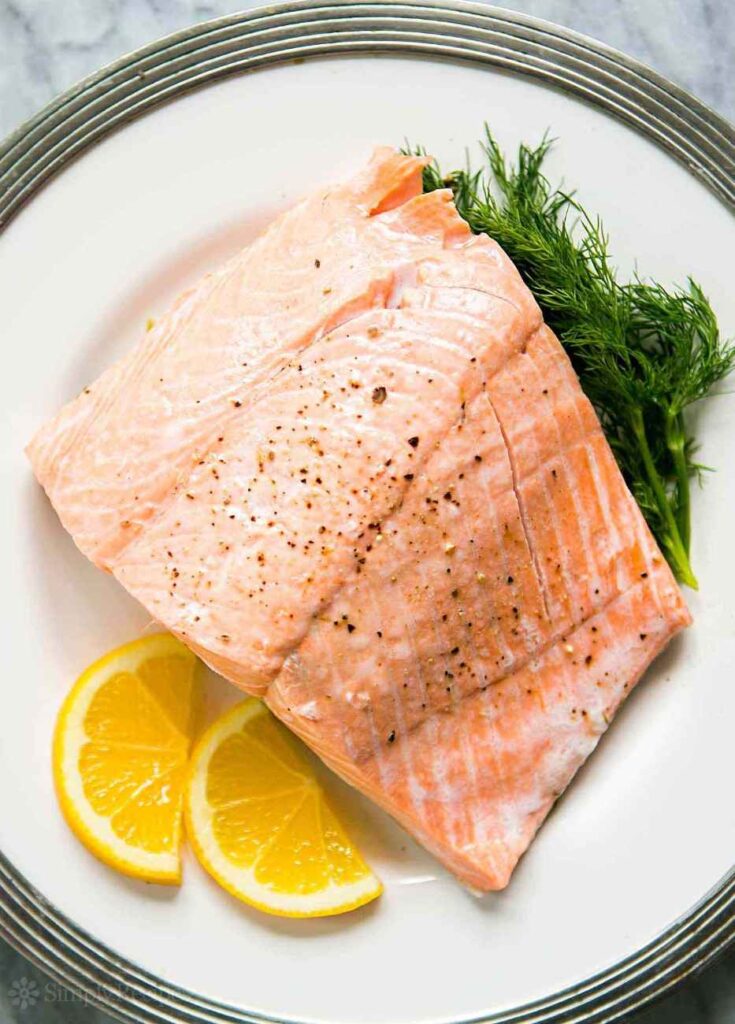
Poached Salmon Recipe (Tender and Foolproof)
Tired of overcooked, dry salmon no matter how carefully you watch the pan? This poached salmon recipe is the perfect solution. It’s easy to make, incredibly tender, and uses simple ingredients you probably already have at home. In this recipe, you’ll learn exactly how to make it, plus expert tips, variations, storage advice, and serving suggestions for the best results every time.
Quick Recipe Overview
- Prep Time: 10 minutes
- Cook Time: 15 minutes
- Total Time: 25 minutes
- Servings: 4
- Difficulty: Easy
Why You’ll Love This Recipe
- Produces perfectly tender, moist salmon every single time you make it.
- Nearly foolproof, since gentle poaching prevents dry, overcooked fish.
- Naturally low-carb, gluten-free, and easy to fit into any diet.
- Ready in just 25 minutes with minimal hands-on effort required.
- Elegant enough for guests, yet simple enough for weeknight dinners.
- Infused with fresh herb and citrus flavor throughout the fish.
- Works beautifully hot, cold, or flaked into other dishes.
Ingredients
- 4 salmon fillets (about 6 ounces each)
- 4 cups water or low-sodium chicken broth
- 1/2 cup dry white wine (optional)
- 1 lemon, sliced
- 3 sprigs fresh dill
- 1 small shallot, sliced
- 1 bay leaf
- 1 teaspoon whole peppercorns
- 1/2 teaspoon salt, plus more to taste
The poaching liquid does the real work here, gently infusing the salmon with herby, citrusy flavor as it cooks low and slow. White wine adds depth and acidity, though it can be omitted for a simpler, broth-only version. Fresh dill and lemon are classic pairings with salmon, brightening the richness of the fish beautifully.
How to Make Poached Salmon
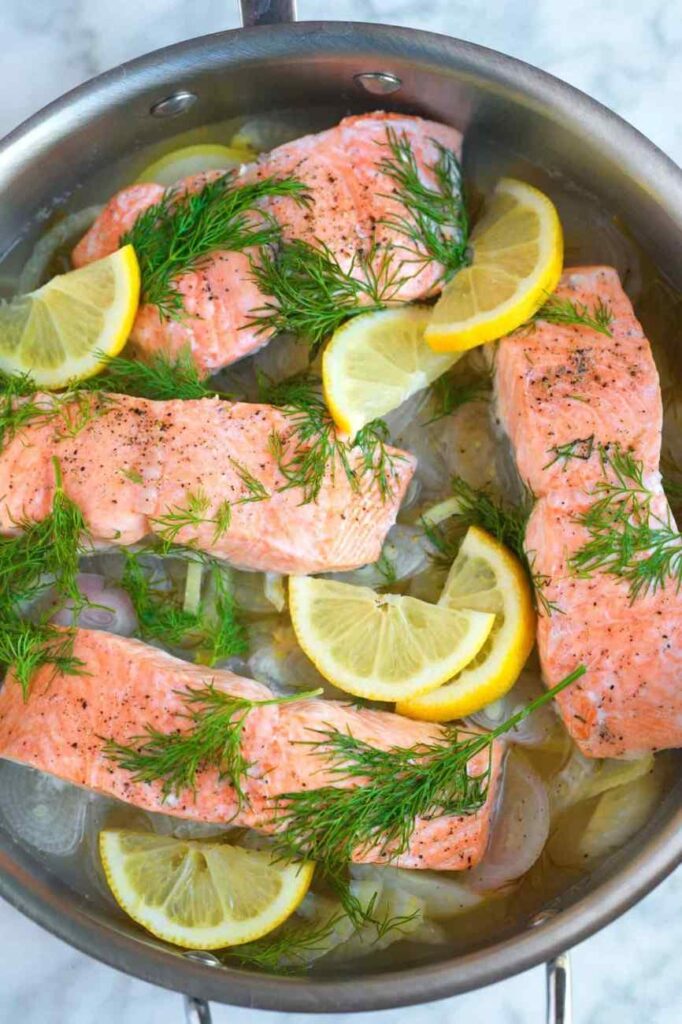
- Prepare the poaching liquid. In a large, wide skillet, combine the water or broth, white wine, lemon slices, dill, shallot, bay leaf, peppercorns, and salt.
- Bring to a simmer. Heat the liquid over medium heat until it reaches a gentle simmer, then reduce the heat to low.
- Add the salmon. Carefully place the salmon fillets into the liquid in a single layer, making sure they’re mostly submerged.
- Poach gently. Cover the skillet and let the salmon cook gently for 10–15 minutes, depending on thickness, until it flakes easily with a fork.
- Check for doneness. The salmon should reach an internal temperature of 145°F and appear opaque throughout.
- Remove carefully. Use a slotted spatula to gently lift the salmon out of the poaching liquid, letting excess liquid drain off.
- Season and serve. Season with a little extra salt if needed, then serve warm, at room temperature, or chilled.
Expert Tips
- Use a wide, shallow pan so the salmon lies flat in a single layer.
- Keep the liquid at a gentle simmer, never a rolling boil, to prevent toughness.
- Choose fillets of similar thickness so they all finish cooking at the same time.
- Don’t skip the acid, since lemon or wine helps balance the richness of the fish.
- Use a fish spatula for the gentlest, most intact removal from the liquid.
- Check doneness a few minutes early, since salmon continues cooking slightly after removal.
- Save and strain the poaching liquid to use as a flavorful base for soup.
- Let the salmon rest for a minute before serving to firm up slightly.
- Chill poached salmon fully before flaking it into salads for the best texture.
- Double the poaching liquid recipe if cooking a larger batch of fillets.
Easy Variations
- High Protein: Serve two fillets per person for a heartier, protein-packed dinner option.
- Healthy: Skip the wine and use low-sodium broth for a lighter, cleaner version.
- Spicy: Add sliced fresh chili or a pinch of red pepper flakes to the poaching liquid.
- Vegetarian: This recipe isn’t suitable for vegetarians, but the poaching method works for tofu steaks.
- Family-Friendly: Keep the herbs mild and skip the wine for a simple, kid-friendly version.
What to Serve With It
Poached salmon pairs beautifully with roasted asparagus, steamed rice, or a simple green salad. A dollop of dill sauce or a squeeze of fresh lemon adds a nice finishing touch. For a lighter meal, serve it chilled over mixed greens with a light vinaigrette dressing.
Storage and Reheating
Store leftover poached salmon in an airtight container in the refrigerator for up to 3 days. Reheat gently in a low oven or enjoy cold, since salmon reheats best with gentle, indirect heat. This dish also freezes well for up to 2 months; thaw overnight in the fridge before serving for the best texture.
Common Mistakes to Avoid
- Boiling the liquid too hard can toughen the salmon and dry it out quickly.
- Using a pan that’s too small causes uneven cooking and overcrowded fillets.
- Skipping the acid results in a flatter, less balanced overall flavor.
- Overcooking the fish leads to a dry, flaky texture instead of tender and moist.
- Removing salmon too roughly can cause the delicate fillets to break apart.
FAQs
How do I know when poached salmon is done?
It should flake easily with a fork and reach an internal temperature of 145°F.
Can I poach frozen salmon?
It’s best to thaw salmon first for even cooking and accurate timing throughout.
Is white wine necessary for this recipe?
No, it adds depth, but the recipe works well with broth or water alone.
Can I poach salmon ahead of time?
Yes, it can be made a day ahead and served cold or gently reheated.
What’s the best poaching liquid to use?
A mix of water, wine, herbs, and citrus creates the most flavorful, balanced result.
Can I use this method for other types of fish?
Yes, this gentle poaching technique also works well for cod, halibut, or trout.
Do I need to remove the skin before poaching?
No, poaching with the skin on helps hold the fillet together, and it peels off easily after.
Can I add other vegetables to the poaching liquid?
Yes, sliced fennel, carrots, or celery all add nice flavor to the broth as it simmers.
Conclusion
This poached salmon recipe brings tender, restaurant-quality fish straight to your own kitchen with a nearly foolproof method. It’s the kind of dish that works for both busy weeknights and special occasions alike. Give it a try tonight, and enjoy perfectly cooked salmon every single time.