Pickled Eggs Recipe (Tangy and Easy)
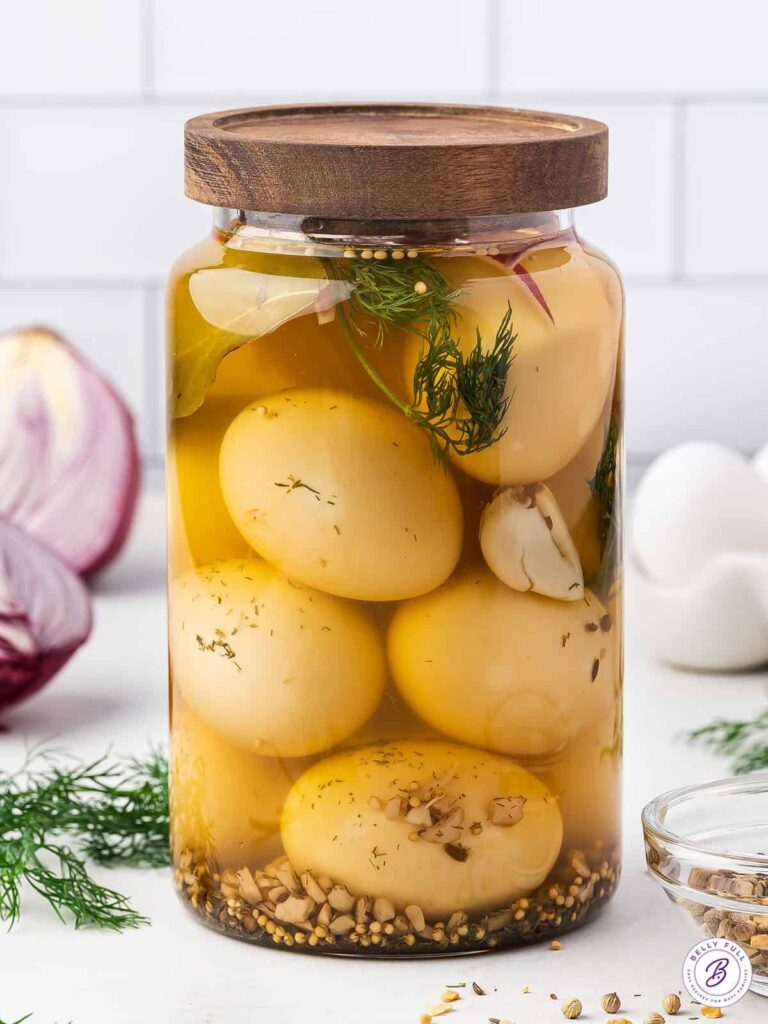
Looking for a tangy, protein-packed snack that keeps well in the fridge? This pickled eggs recipe is the perfect solution. It’s easy to make, wonderfully tangy, and uses simple ingredients you probably already have at home. In this recipe, you’ll learn exactly how to make it, plus expert tips, variations, storage advice, and serving suggestions for the best results every time.
Quick Recipe Overview
- Prep Time: 15 minutes
- Cook Time: 12 minutes
- Total Time: 27 minutes (plus pickling time)
- Servings: 12 eggs
- Difficulty: Easy
Why You’ll Love This Recipe
This classic pantry staple proves that a few simple ingredients can create a truly addictive, tangy snack.
- Turns simple hard-boiled eggs into a tangy, flavorful snack.
- Uses basic pantry staples you likely already have on hand.
- Naturally low-carb, gluten-free, and fits into many diets.
- Great make-ahead snack that keeps well for weeks in the fridge.
- Endlessly customizable with different spices, herbs, or add-ins.
- Budget-friendly way to use up extra eggs from the fridge.
- A classic, nostalgic snack that’s easy to recreate at home.
Ingredients
- 12 large eggs
- 1 1/2 cups white vinegar
- 1 cup water
- 2 tablespoons granulated sugar
- 1 tablespoon salt
- 2 cloves garlic, smashed
- 1 teaspoon whole peppercorns
- 1 teaspoon mustard seeds (optional)
- 1 bay leaf
- 1/2 teaspoon red pepper flakes (optional)
White vinegar forms the tangy base of the pickling liquid, so choose a good-quality vinegar for the best flavor. Sugar balances the acidity, while garlic, peppercorns, and bay leaf add aromatic depth throughout the brine. Fully cooled hard-boiled eggs absorb the pickling liquid best, so patience during this step really pays off. Mustard seeds and red pepper flakes are optional, but they add a subtle pop of texture and gentle heat that many people find addictive.
How to Make Pickled Eggs
This simple method involves boiling, peeling, and soaking the eggs in a flavorful brine for several days.
- Boil the eggs. Place the eggs in a pot and cover with cold water by about an inch. Bring to a boil, then remove from heat, cover, and let sit for 10–12 minutes.
- Cool and peel. Transfer the eggs to an ice bath, then peel once fully cooled.
- Make the brine. In a saucepan, combine the vinegar, water, sugar, salt, garlic, peppercorns, mustard seeds, bay leaf, and red pepper flakes.
- Simmer the brine. Bring the mixture to a simmer, stirring until the sugar and salt fully dissolve, then remove from heat.
- Cool the brine slightly. Let the brine cool for about 10 minutes so it doesn’t cook the eggs further.
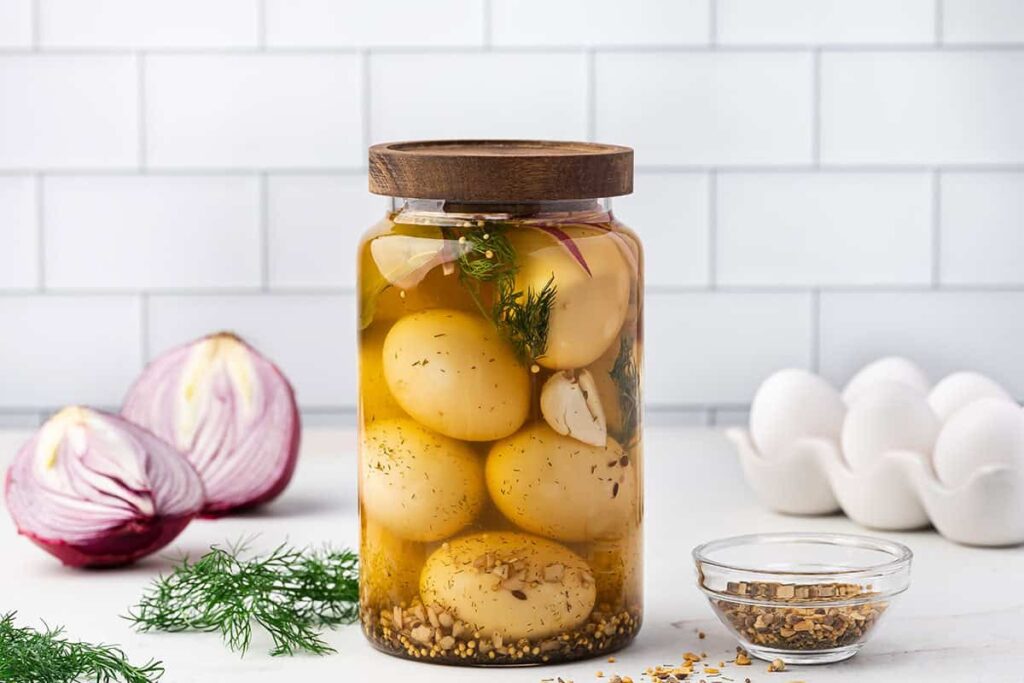
- Pack the jar. Place the peeled eggs into a clean glass jar, packing them in fairly snugly.
- Pour over the brine. Pour the warm brine over the eggs, making sure they’re fully submerged.
- Seal and refrigerate. Seal the jar and refrigerate for at least 3 days before eating, though a full week gives the best flavor.
Expert Tips
- Use eggs that are a few days old, since very fresh eggs are harder to peel.
- Cool the brine slightly before pouring to avoid overcooking the eggs further.
- Use a clean, sterilized jar to help the eggs stay fresh longer.
- Make sure eggs are fully submerged in the brine for even pickling.
- Let the eggs pickle for at least 3 days, though longer improves the flavor.
- Shake or turn the jar occasionally to help distribute the brine evenly.
- Use a glass jar rather than plastic, since vinegar can affect certain plastics over time.
- Double the recipe if you go through pickled eggs quickly in your household.
- Add fresh dill or sliced jalapeños for extra flavor variations.
- Label the jar with the date made so you can track freshness easily.
Easy Variations
- High Protein: Enjoy pickled eggs alongside cheese or nuts for an extra protein boost.
- Healthy: Reduce the sugar slightly for a lower-sugar version of the classic brine.
- Spicy: Add extra red pepper flakes, sliced jalapeños, or a dash of hot sauce.
- Vegetarian: This recipe is naturally vegetarian as written, with no substitutions needed.
- Family-Friendly: Skip the spice and red pepper flakes for a milder, kid-friendly version.
What to Serve With It
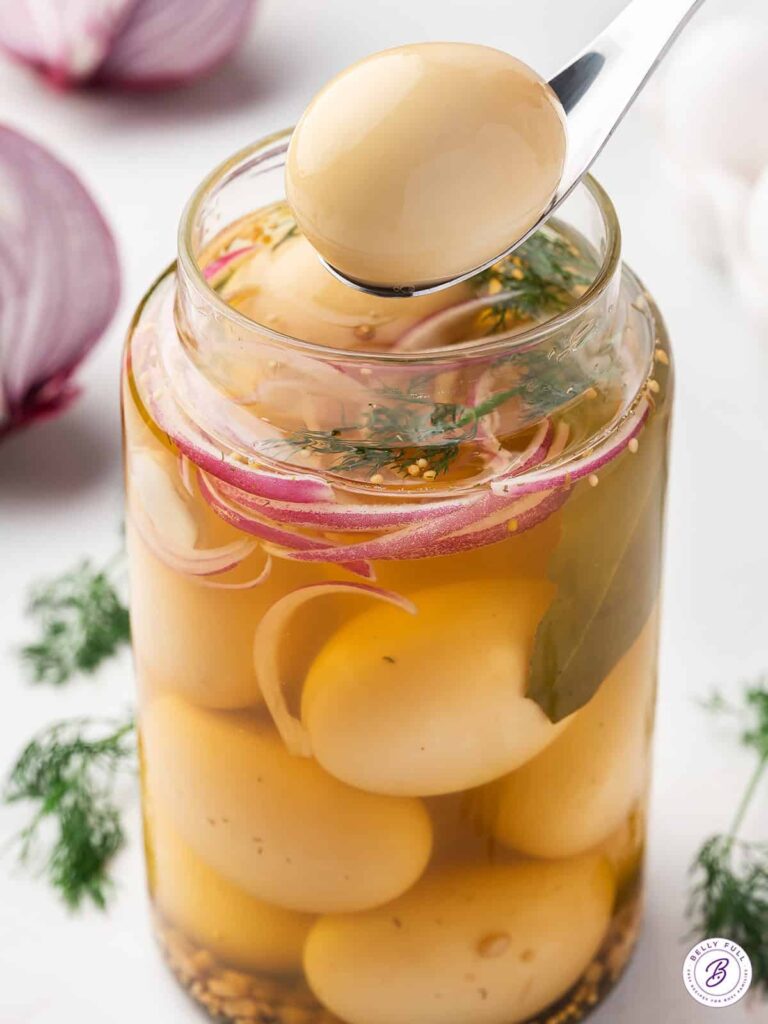
Pickled eggs make a great standalone snack, but they also pair well with crackers and cheese. Serve them alongside a charcuterie board for a tangy, protein-packed addition. Chopped pickled eggs also work wonderfully in potato salad or deviled egg recipes for extra flavor. A cold beer or a simple picnic spread also pairs nicely with the tangy, briny flavor of the eggs.
Storage and Reheating
Store pickled eggs in their sealed jar in the refrigerator for up to 3 months. No reheating is needed, since pickled eggs are always served cold or at room temperature. Always use clean utensils when removing eggs from the jar to keep the brine fresh for as long as possible.
Common Mistakes to Avoid
A few small missteps can affect both the texture and shelf life of your pickled eggs, so keep these in mind.
- Using very fresh eggs makes peeling difficult and can leave a messy final result.
- Pouring hot brine over eggs can cause them to become tough or overcooked.
- Not fully submerging the eggs leads to uneven pickling and inconsistent flavor.
- Skipping the resting time results in eggs that taste bland rather than tangy.
- Using a non-sterilized jar can shorten the shelf life of the finished eggs.
FAQs
How long do pickled eggs last?
Stored properly in the refrigerator, they stay fresh for up to 3 months.
How long should eggs pickle before eating?
At least 3 days is recommended, though a full week gives the best flavor.
Can I reuse the pickling brine?
It’s best to make a fresh batch each time for food safety and flavor consistency.
Are pickled eggs safe to eat?
Yes, they are safe to eat as long as they’re stored properly in the refrigerator and fully submerged.
Can I add beets to my pickled eggs?
Yes, adding sliced fresh beets to the brine creates a beautiful pink color along with a lovely earthy flavor.
Why are my pickled eggs rubbery?
This usually happens from overcooking the eggs initially during boiling, or pouring in brine that’s still too hot.
Can I use apple cider vinegar instead of white vinegar?
Yes, apple cider vinegar works quite well here and adds a slightly milder, subtly sweeter flavor to the finished eggs overall.
Do I need to boil the eggs before pickling?
Yes, eggs must be fully hard-boiled and completely peeled before being added to the flavorful pickling brine mixture.
Conclusion
This pickled eggs recipe brings a tangy, nostalgic snack straight to your own kitchen with simple, easy-to-find ingredients. It’s a great way to use up extra eggs while creating something truly flavorful and satisfying. Give it a try this week, and enjoy a tangy snack ready whenever you want it.