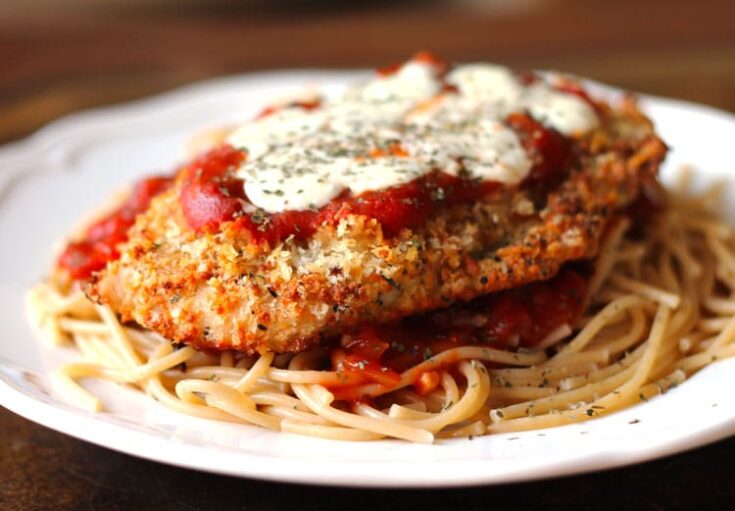
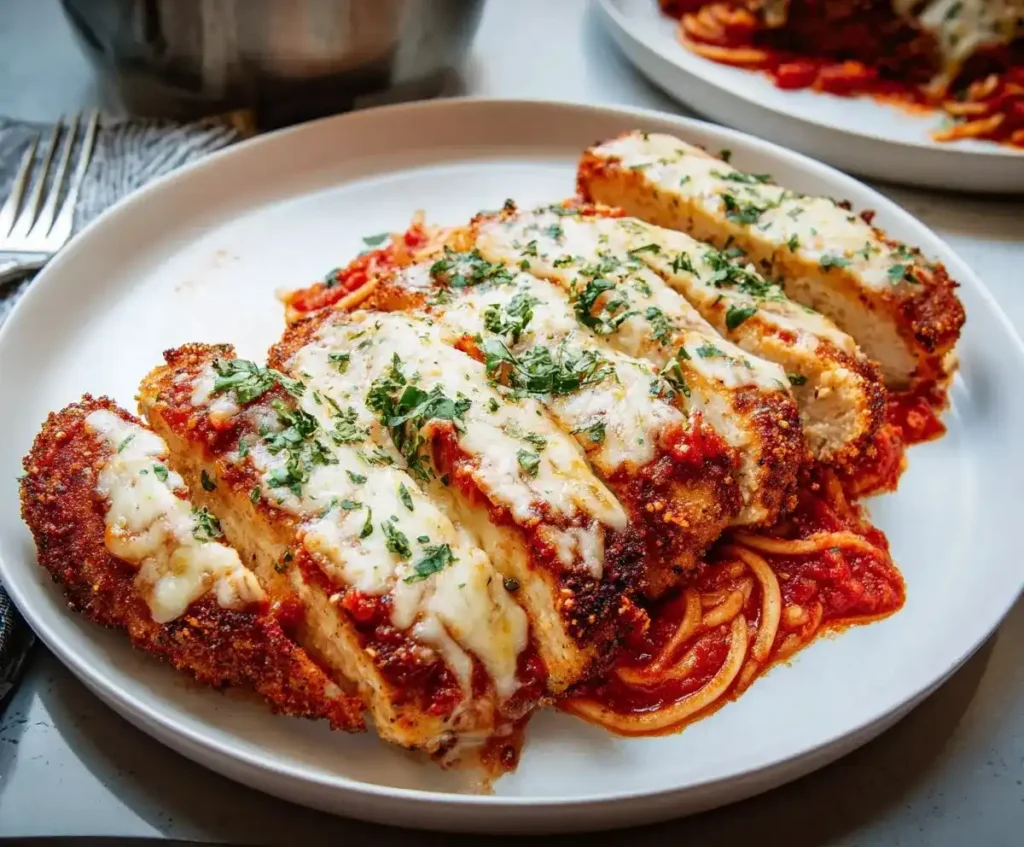
Chicken Parmesan Recipe: Crispy, Juicy, and Never Soggy (Every Problem Solved)
Most home cooks have made chicken parmesan and felt that sinking disappointment — you bread and fry the cutlets to golden perfection, then pull a soggy, pale dish out of the oven. The crust has turned to mush. The chicken is dry. The cheese is rubbery. The answer is almost never one big mistake — it’s three or four small ones happening simultaneously. This Chicken Parmesan Recipe fixes all of them, step by step, so you get a shatteringly crispy crust, juicy meat, and bubbling golden cheese every single time.
Why This Chicken Parmesan Recipe Works
Solves the soggy crust problem at every stage — the breading, sauce amount, assembly order, and baking method.
Juicy chicken guaranteed — pounding to even thickness and direct seasoning keeps every bite moist.
Restaurant techniques, home kitchen simplicity — the same methods professionals use, explained clearly so you understand why they work.
Ready in 45 minutes — prep, fry, and bake for a full impressive dinner in under an hour.
Ingredients (Serves 4)
The Chicken
- 2 large boneless skinless chicken breasts — halved into 4 cutlets, pounded to ½-inch thickness
- 1 teaspoon salt — for seasoning the chicken directly
- ½ teaspoon black pepper
The Breading (The Soggy-Proof Formula)
- ¼ cup all-purpose flour — first coat that helps everything adhere
- 2 large eggs, beaten — the binding layer
- ¾ cup grated parmesan cheese — replaces most breadcrumbs; parmesan has no starch and resists moisture absorption
- ½ cup panko breadcrumbs — lighter and crunchier than regular breadcrumbs
- 1 teaspoon garlic powder
- 1 teaspoon Italian seasoning
- 3 tablespoons olive oil
The Topping
- ¾ cup marinara sauce — use less than you think you need
- 4 oz fresh mozzarella, sliced — low-moisture; never pre-shredded
- ¼ cup freshly grated parmesan — for finishing
- Fresh basil — torn, for serving
Step-by-Step Instructions
Step 1: Pound the Chicken
Place each cutlet between plastic wrap and pound from the center outward to ½-inch thickness. This solves three problems: breaks down muscle fibers for tenderness, ensures even cooking so nothing dries out, and gives the breading a flat surface to grip.
Step 2: Season the Chicken Directly
Season both sides before breading — most cooks only season the breadcrumbs. Seasoning the meat builds flavor from the inside out. Let the cutlets rest 5–10 minutes. Salt draws moisture to the surface and back in, keeping the meat juicier during frying.
Step 3: Set Up the Breading Station
Three bowls: seasoned flour; beaten eggs; parmesan, panko, garlic powder, and Italian seasoning. The high parmesan-to-breadcrumb ratio is the key — parmesan has zero starch and does not absorb sauce the way breadcrumbs do. Season every layer.
Step 4: Bread Each Cutlet
Pat completely dry — moisture prevents flour from adhering. Dredge in flour, shake off all excess. Dip in egg. Press firmly into the parmesan-panko mixture on both sides. For an extra-thick crust, double-dip in egg and panko.
Step 5: Fry Until Deeply Golden
Heat olive oil in an oven-safe skillet over medium-high until shimmering. Fry two cutlets at a time — overcrowding creates steam that destroys the crust. Cook 3–4 minutes per side until deeply golden. Transfer to a wire rack, not paper towels.
Step 6: The Correct Assembly Order
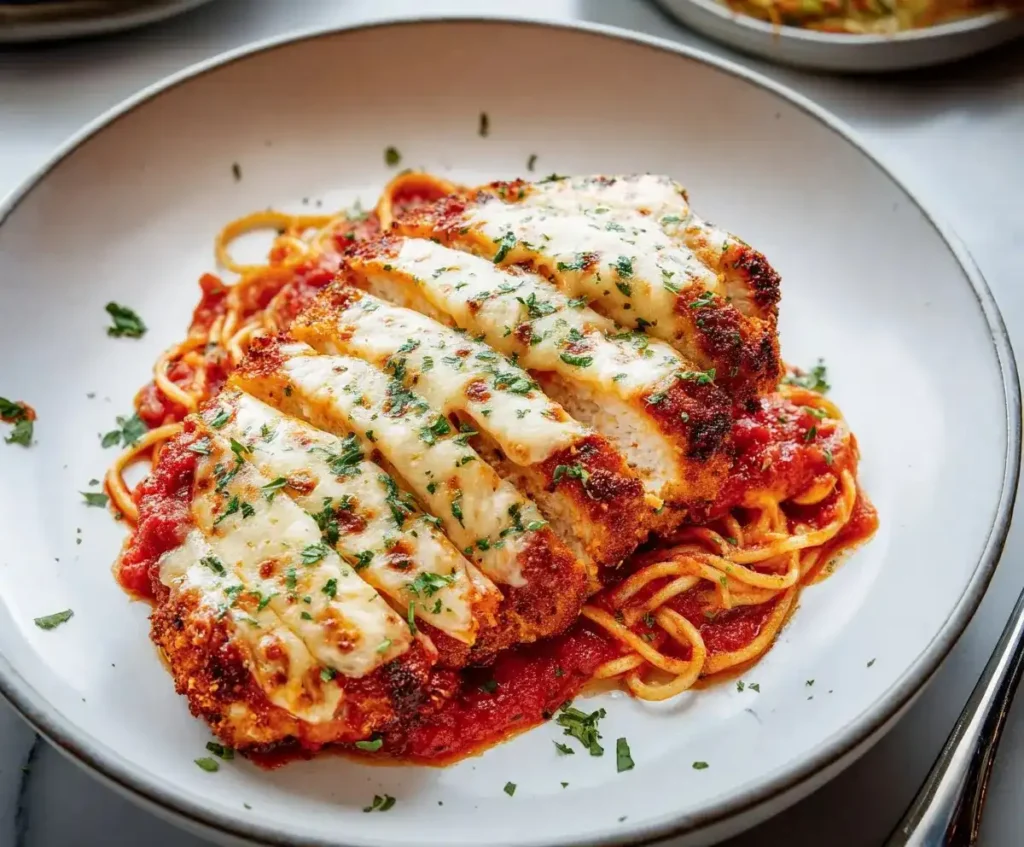
This is where most recipes fail. Place mozzarella directly on the fried cutlets, leaving a ½-inch crispy border around the edges. Spoon 2–3 tablespoons of marinara on top of the cheese — never on the crust. The cheese forms a waterproof barrier between sauce and breading. Sprinkle parmesan over the top.
Step 7: Bake Hot and Fast
Bake at 425°F for 10–12 minutes until the cheese is melted and bubbling. High heat, short time preserves the crust — low, slow baking lets sauce moisture destroy it. Use stainless steel, not glass. Serve remaining marinara on the side.
Read Also This Recipe: Air Fryer Chicken Tenders Recipe You’ll Love
The 4 Most Common Problems — Solved
Problem 1 — Soggy Crust: Too much sauce or sauce touching the breading directly. Fix: parmesan-heavy breading, mozzarella before sauce, only 2–3 tablespoons per cutlet, and serve extra on the side.
Problem 2 — Dry Chicken: Uneven thickness or overcooking. Fix: pound to ½-inch, season directly, and verify at 165°F with a thermometer.
Problem 3 — Coating Falls Off: Wet chicken or excess flour. Fix: pat completely dry, shake off all excess, and press panko firmly on all sides.
Problem 4 — Rubbery Cheese: Pre-shredded mozzarella contains starch that blocks melting. Fix: always use fresh low-moisture mozzarella from a block.
Expert Tips for Perfect Results
Use a thermometer. Chicken parmesan is done at 165°F internal temperature. Every oven and cutlet differs slightly — a thermometer removes all guesswork.
Rest on a rack always. After frying and baking, the rack maintains airflow under the crust and prevents steam from softening it.
Thick sauce only. Watery marinara? Simmer for 10 extra minutes. Thin sauce releases water during baking and soaks straight into the bread.
Season at every stage. Salt on the chicken, in the flour, and in the bread. Layered seasoning tastes dramatically different from flavoring added only at the end.
Variations Worth Trying
Baked Only: Skip frying and bake breaded cutlets at 425°F on a wire rack for 20 minutes before adding toppings. Less crispy but still excellent.
Chicken Thigh Version: Boneless thighs stay juicier and are harder to overcook — a great swap for beginners.
Spicy Arrabbiata: Swap marinara for arrabbiata and add red pepper flakes to the breading for a bold, spicy version.
Storage and Reheating
Fridge: Store in an airtight container for up to 3 days, sauce separate if possible.
Reheating: Oven at 375°F for 10–12 minutes on a wire rack to restore crispiness. Microwave turns the breading soft and cheese rubbery — avoid it.
Frequently Asked Questions
Can I use chicken thighs?
Absolutely — juicier and more forgiving. Pound to even thickness and follow the same steps.
Why won’t my cheese melt?
Pre-shredded mozzarella contains starch that blocks smooth melting. Always use fresh mozzarella from a block.
Can I bread ahead of time?
Yes — refrigerate uncovered on a rack up to 4 hours before frying. Chilling helps the coating bond.
What pasta works best?
Spaghetti with marinara is traditional, but linguine, rigatoni, or a simple green salad all work beautifully.
Conclusion
Chicken Parmesan is not difficult — it requires understanding where things go wrong and building the right habits. Follow these steps and you will never pull a soggy, dry disappointment out of the oven again.
Prep: 15 min | Cook: 30 min | Total: 45 min | Serves: 4